
Jenny Hall
Verses from the Dhammapada 146
Buddhist practice teaches us how to transform pain and suffering into joy and life.
 ©
© shutterstock
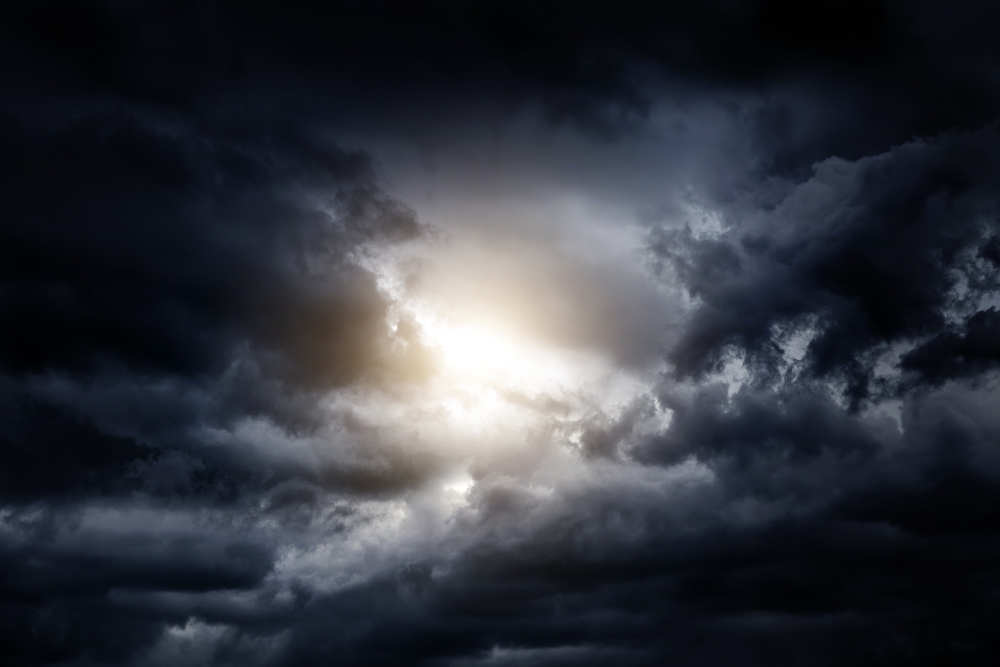
“How can there be laughter and joy when the world is always ablaze. Clouded in darkness. Why do we not see the light?”
‘How can there be laughter and joy…’
There seems to be much despondency around at present. There are wars being waged in many parts of the world. There are thousands of refugees seeking shelter. There is devastation caused by climate change. There is deep political unrest. We may attempt to escape the situation by switching off the news. We may spend many hours discussing political solutions. Alternatively, we may seek to distract ourselves like the women in the following story traditionally associated with this Dhammapada verse.
Visäkhä had some female companions. They met up one day and drank too much alcohol. Afterwards they joined a group of the Buddha’s followers who were listening to his teaching. Thoroughly intoxicated, Visäkhä’s friends started to laugh loudly and dance with abandon, ignoring the Buddha’s words and disturbing those who were listening. Tradition states that a spirit from Mara’s realm attempted to force them to further indiscretions. However, the Buddha drove it away. He caused a dark blue ray to appear. The whole area was immediately plunged into darkness. This was followed by a bright beam of light. It was as though a thousand moons had risen. The women were shocked into sobriety. In humility they bowed down before the Buddha and took heed of his teaching.
‘… when the world is always ablaze…’
The Buddha taught that the world is characterised by suffering. What causes this suffering? We are ‘ablaze’ with the fires of desire and hatred. We attempt to destroy what we perceive as not suiting ‘me’. We chase after what we believe does. We then cling to it despite the fact that, like everything, it eventually passes away. Mara in the story represents these passions. The Zen training is concerned with their transformation into the light of the Buddha nature, symbolised by light in the story.
‘… clouded in darkness.’
Driven by the fires we make mental pictures. These create the delusion of ‘me’. This delusion forms a barrier to reality. So, we are ‘clouded in darkness’. We cannot see clearly. This leads to inappropriate behaviour causing harm to everything and everyone around us. In this way the suffering of the world increases.
‘Why do we not see the light?’
The Buddha promised that there is an end to suffering. When the hot emotional energy is recognized, greeted and invited to ‘burn me away’, the clear sight of ‘Choiceless Awareness’, the Buddha Nature opens. This is the ‘light’ of the open heart. It is expressed in boundless energy spreading warmth and compassion to all. In the Zen tradition, challenging times such as ours are regarded as precious training opportunities. Instead of being overwhelmed we are encouraged to embrace them wholeheartedly. My parents would often speak of the warm community feeling that prevailed during WWII. Yes, there was much suffering and hardship. Many lost loved ones. Many were injured. Homes were destroyed. However, altruism blossomed. Everyone contributed to the war effort in a myriad of ways. Some worked all day in factories. Some fire watched at night. Some nursed the injured. Some drove ambulances. Everyone looks out for his or her neighbour.
Such selflessness is explored in a domestic setting in Virginia Woolf’s, To the Lighthouse. Throughout the novel, Choiceless Awareness is symbolised by the steady pulsating rays of the lighthouse. Mrs Ramsay is described as sitting quietly ‘at-one’ with its bright strokes. She gives herself wholeheartedly to her family, guests and daily chores. She lives in empathetic relationship with them all. She expresses great tenderness not only towards the people around her but also towards the trees and flowers. On the other hand, Mr. Ramsay her husband is cold and full of self-pity. He constantly seeks his wife’s attention. His overbearing ego estranges both his children and guests. Mrs. Ramsay promises their little boy James a visit to the lighthouse. With insensitivity his father destroys his hopes by announcing that the excursion will be cancelled as poor weather is expected.
In the second part of the story everything has changed. Mrs. Ramsay has died. Her son Andrew has been killed in the war. Her daughter Prue has died in childbirth. The house by the sea is uninhabited. However, the lighthouse still emits light. At the end of the story, Mr. Ramsey continues to crave affection as he grieves for his wife. His selfishness is overcome at last as he agrees to sail over to the lighthouse with James. In so doing he surrenders his own wishes in order to please his son. James’ long held resentment towards his father vanishes. For the first time he feels a warm connection with him. Reaching the lighthouse there is peace and harmony. In the same way, when we live in the light of the Buddha Nature free from self-consciousness, there is at-one-ment with all.


 Now reading


